
KEY RESULTS
The Oates Lab at EPFL's School of Life Sciences uses fluorescence live imaging to track hundreds of cells across developing 3D zebrafish embryos — generating 913 GB datasets per movie and up to 6 movies per week. Data must be retained for 5–15 years across on-premise servers and Amazon S3. With each transfer taking over 2 hours on a 1 Gbit connection, and storage costs scaling with every new project, the lab faced growing bottlenecks in both time and budget with no room to expand experiment throughput.
In 2021 with Jetraw integrated into their Viventis + Hamamatsu imaging pipeline, the Oates Lab reduced each 913 GB dataset to 115 GB with no loss of image information. Transfer times dropped from 2 hours to 15 minutes. Over a 5-year project with 10-year archival, this could translate to more than $1M in storage savings and a reduction in CO₂ emissions from 414 t to 39 t — while freeing up capacity to run more experiments simultaneously and reduce animal use through data reuse.

"We acquire large time-lapse movies to capture the dynamics of the growing zebrafish embryo and struggle to interact with our terabyte size data due to slow data transfer and expensive storage. With Jetraw we have solved these issues with the perk of not losing any information on the data."
— Dr. Arianne Bercowsky Rama, Oates Lab, EPFL
The Oates Lab generates up to 6 time-lapse movie datasets per week, each a 3D volumetric stack of 1.57 GB per frame totalling 913 GB per full movie. With data needing to be stored across short-term on-premise servers and long-term Amazon S3 archive for up to 15 years, the volume compounds rapidly. On a standard 1 Gbit connection, transferring a single dataset took more than 2 hours, slowing the pace at which scientists could move between acquisition, analysis, and collaboration.
Jetraw has been integrated into the Oates Lab's full imaging pipeline, sitting between the Viventis LS1 light sheet microscope, the Hamamatsu ORCA-Fusion BT camera, and downstream storage. Acting as middleware, it compresses raw image data at 8:1 while preserving metrological accuracy — meaning every pixel value captured by the Hamamatsu sensor is retained for downstream analysis in Fiji, Imaris, and Arivis. Compression happens automatically on upload, and files decompress transparently during processing, requiring no changes to existing acquisition or analysis workflows.
With Jetraw, the Oates Lab cut transfer times from 2 hours to just 15 minutes per dataset — an 8× improvement. Individual 3D stacks that previously occupied 1.57 GB now store at 196 MB. The lab can now work on more movies simultaneously, as freed-up local and cloud capacity allows parallel access across projects. For a lab generating 270 TB per year with 10-year archival requirements, this could amount to over $1M in cost savings per 5-year project.
For the Oates Lab, storing 270 TB/year over a 10-year archival period without compression would generate an estimated 414 tonnes of CO₂. With Jetraw, that figure drops to 39 tonnes, avoiding 375 tonnes of emissions per project — equivalent to planting over 12,000 trees. Beyond environmental impact, the ability to store more data means scientists can reuse existing datasets across studies, reducing the number of animals needed in experiments and enabling larger sample sizes for more statistically robust results.

Jetraw is an image data management solution that sits between your microscopes and your storage systems.
Headquarters
Lausanne, CH
Founded
Oates Lab- 2016
Instruments
Viventis LS1 Live light sheet microscope; Hamamatsu ORCA-Fusion BT
Imaging technique
Fluorescence live imaging, 3D embryo development, segmentation clock, cell tracking
Partner

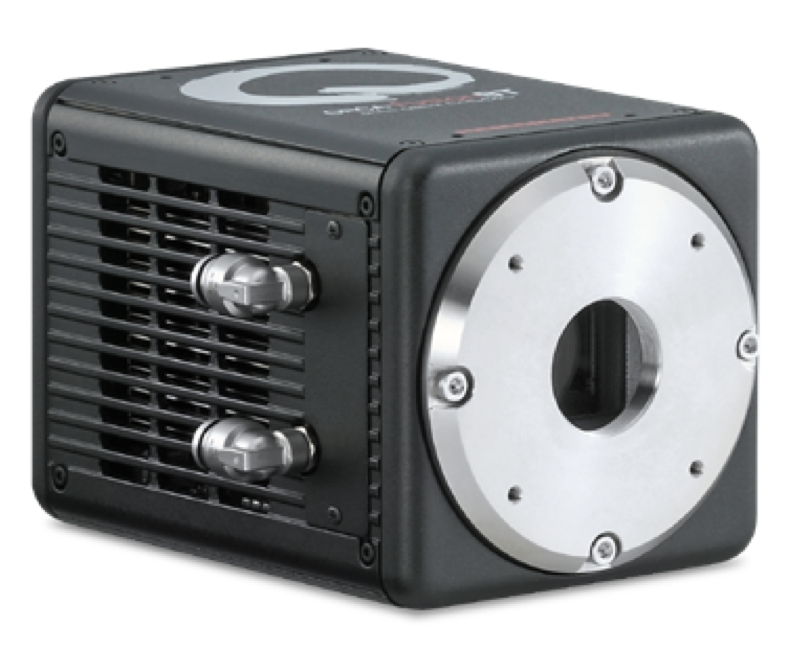
Powering the Viventis LS1 Live light sheet microscope
High QE for low-light fluorescence imaging
CCD-like uniformity for clean signal
Enables high-speed 3D volumetric acquisition
Images entire early-stage embryos in a single FOV
Learn more
Book a 30-minute discovery session. We'll walk you through how Jetraw fits into your imaging workflow.
Book a demo
We use cookies to enhance your browsing experience and analyse site traffic. By clicking "Accept all" you consent to our use of cookies. Manage preferences