
Perception teams at leading Tier 1s use Jetraw Core to multiply the usable training data from every test vehicle, without hardware changes, without compromising raw image quality, and without rebuilding their data pipeline.
Open Bosch Award 2025
Jetraw Core selected from 70 applications across 20 Bosch business units for measurable results in ADAS data pipeline efficiency.
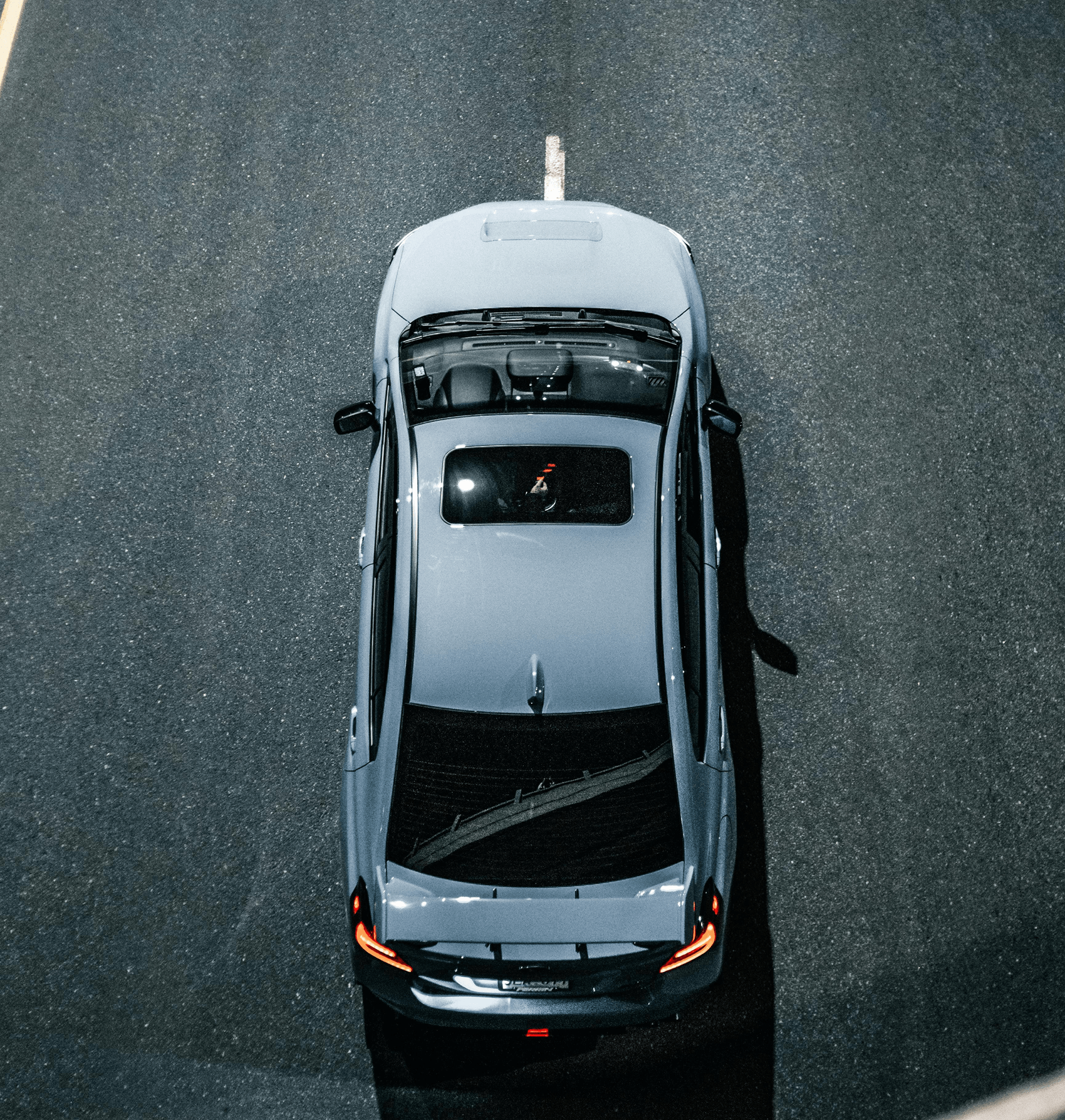



Every perception engineer knows the frustration: hours of test drive data sitting on drives waiting to be uploaded, annotated, and fed into training. You never have enough clean data, and the data you do have costs a fortune to store.
Standard compression tools destroy the sensor-level signal your perception AI needs. You are forced to choose between storage cost and data quality. Jetraw removes that tradeoff entirely.
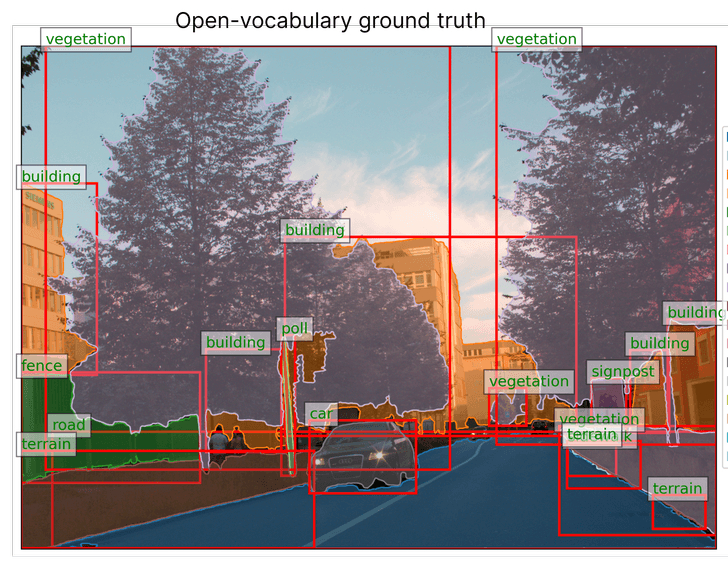
“We collect terabytes per day per vehicle. Getting that into a usable training set before the week is out is the hardest part of our job.”
ML Engineering Lead
A single test day produces tens of terabytes. Uploading over 10 Gbps still takes hours. Fleets multiply this to days.
Petabyte-scale raw archives on cloud storage run into millions per year per vehicle programme. And the data keeps growing.
Visually lossless codecs remove the sensor statistics your perception models train on. Models learn artefacts instead of features.
With limited on-board storage per test run, you make hard choices about what data to keep. The edge cases that matter most are often the first to go.
Jetraw Core applies compression directly to the raw sensor data stream. It compresses the noise aggressively and preserves the signal. Every compressed frame is statistically indistinguishable from the original. Your perception models train on real sensor physics, not processing artefacts.
6:1 compression on raw imagery is typical: that means 6x more data captured on the same on-board storage per test run, 6x faster upload, and 6x lower cloud storage cost, with no change to your sensors, your cameras, or your downstream annotation workflow.
Compress directly on the vehicle before data reaches on-board storage. Higher compression before the data bottleneck hits. Integrates into existing FPGA hardware or camera systems via VHDL source.
Drop in to your existing data pipeline as a software library. No hardware changes. Compress on ingest, reduce storage and egress costs immediately. Callable from C, C++, Python, Java.
Jetraw Core applies nearly-lossless compression directly to the raw sensor data stream. It compresses the noise, not the signal. Every compressed frame is statistically indistinguishable from the original. Your perception models train on real sensor physics, not processing artefacts.
6:1 compression on raw imagery is typical. That means 6x more data captured on the same on-board storage per test run, 6x faster upload, and 6x lower cloud storage cost, with no change to your sensors, your cameras, or your downstream annotation workflow.
Most compression algorithms remove information the human eye cannot detect. But perception AI can. Compression-introduced artefacts, bias, and noise correlations enter your training set and become part of your model’s learned representation of the world.
This is not a theoretical risk. As models become more capable, the quality ceiling imposed by training data quality becomes the dominant constraint on perception performance.
Degraded training data produces slightly less accurate models. Those models require more data to improve. More data increases storage and annotation cost. Jetraw breaks this cycle by ensuring the training data is as close to raw sensor physics as possible from day one.
No blocking, ringing, banding, or aliasing. Compression artefacts that appear as edges or textures cause false positives in object detection and segmentation models.
Jetraw introduces no systematic bias in pixel value distributions. Sensor radiometry is preserved exactly, which matters for any model using intensity as a feature.
Natural sensor noise is spatially uncorrelated. Most compression algorithms introduce structured correlations. Jetraw preserves the natural noise statistics your model expects.
1.2 dB SNR equivalent improvement, equivalent to moving from ISO 100 to ISO 115. Tightly controlled quality bounds on every compressed frame.
Jetraw Core is calibrated at the sensor level. It works with the full range of imaging sensors used in automotive perception systems.
These figures are based on typical L4 test vehicle sensor configurations and a 6:1 compression ratio. The numbers in your programme will depend on sensor count, resolution, and drive frequency.
Get a custom analysis for your fleet ↗Figures based on typical L4 sensor configurations, 6:1 compression, consistent with AWS/BMW petabyte-scale case study (Nov 2025) and Siemens/Polarion industry benchmarks.
Managing petabyte-scale ADAS and camera data across engineering teams
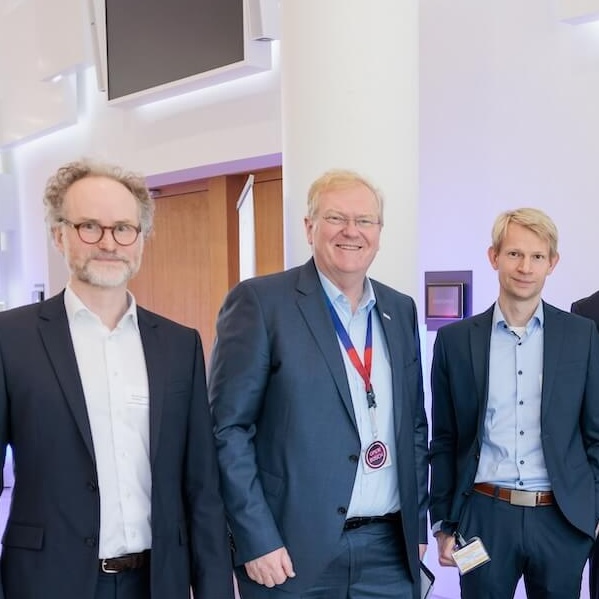
Dotphoton team together with Dr. Stefan Hartung, CEO of Robert Bosch GmbH
"This outstanding startup partnership impressed with its tangible results in advanced driver assistance systems (ADAS). The collaboration began in 2020, when Bosch and Dotphoton started working on AI-ready image compression for safety-critical automotive applications. The solution reduces data storage costs by 80 percent while ensuring the reliability of critical functions such as emergency braking. To date, the project has already saved substantial amounts of money and CO₂, and Bosch is now transferring Dotphoton's technology more broadly into the automotive sector."
Open Bosch Award Committee
Even a state-of-the-art RAW detection model shows significant performance drops in extremely dark scenes — a blind spot invisible without synthetic data. Research from Dotphoton & University of Glasgow.
Read the paper — Pais, Mendilaharzu et al., CVPR 2026CVPR
Autopilot Workshop 2026 · Denver
BEYOND COMPRESSION
Jetraw AI generates physics-accurate synthetic imagery calibrated to your exact sensor. Augment rare edge cases, adverse conditions, and failure modes without extra test drives.
CROSS-SENSOR NORMALISATION
Normalise training data across different sensor generations, manufacturers, and configurations. Reduce the cost of retraining models when sensor hardware changes.
MODEL OPTIMISATION THROUGH PHYSICS
Simulate specific capture conditions: pedestrian detection at distance, at night, and identify the smallest architecture that still meets required performance.
Describe your sensor configuration, test fleet size, and data volumes. We will show you what integration looks like and what the impact is likely to be for your programme specifically.
— FAQ
The numbers seem too good to be true. How is this actually possible?
It's a fair reaction, and one we hear often. The reason Jetraw can deliver compression ratios that other tools can't is fundamentally different from how conventional compressors work. Most compressors treat an image as an abstract grid of numbers and apply general-purpose mathematical transforms. Jetraw is built around a physical model of the image sensor itself. It understands which variations in pixel values carry real information about the scene and which are noise inherent to the imaging process that can be safely discarded without losing any meaningful signal. This sensor-aware approach is what makes the difference. By compressing only what is physically meaningful, Jetraw achieves ratios that purely mathematical methods cannot reach, without the trade-offs people typically expect.
Why not use H.264, JPEG, or another standard codec?
Standard codecs are designed for human viewing, not for machine perception or downstream image processing. They discard information that the eye doesn't notice but that your perception stack, calibration tools, or validation pipeline may very much rely on. Jetraw produces output that is indistinguishable from the original RAW image for all subsequent processing. Whatever your team does with RAW data continues to work exactly as before: neural-network inference stays accurate because the input distribution is preserved, data augmentation produces physically realistic samples because the pixel values are still linear and meaningful, replay and resimulation remain bit-accurate so regression tests actually test the model rather than codec artifacts, ISP tuning is still possible because the RAW Bayer data is intact, and auto-labelling pipelines reach their full accuracy ceiling instead of being capped by lossy inputs. This matters for two reasons that are especially important in automotive contexts: Future-proofing. If your data requirements evolve — new perception models, new validation criteria, new regulatory demands — you still have access to the full RAW fidelity. With lossy consumer codecs, that information is gone for good. Quality guarantees. Jetraw comes with strong, provable bounds on the deviation from the original signal. For safety arguments and certification work, having a mathematically defensible quality statement is far more valuable than "looks fine to the eye." Safety documentation is available through our partners on request.
What about safety in mission-critical applications?
Jetraw output is genuine RAW image data, indistinguishable from the original for downstream processing, and has been deployed in mission-critical production environments for many years. For automotive specifically, validation tooling, services, and safety documentation are available through our partners, for a fast path to integration and time-to-market.
I'd like to try it. What's the process?
Getting started is straightforward. We provide a trial version of Jetraw that you can run on your own images and benchmark against your current pipeline. Because Jetraw relies on a physical model of your specific sensor, we need a little information about it to prepare the trial — either an EMVA1288 report, or a set of representative sample images we can use to derive the relevant sensor parameters. From there, we hand over the trial build and you can evaluate compression ratios, runtime, and output quality on your own hardware.
Does Jetraw work for video and high-throughput data streams?
Yes. Jetraw compresses in real time. On CPU (Intel i9-14900K), it reaches 8 GB/s compression and 5.6 GB/s decompression running 32 images in parallel across all cores, on Intel, AMD, and ARM CPUs across Linux, Windows, and macOS. On FPGA, the IP Core reaches up to 6.4 Gpx/s compressing 32 pixels in parallel at 200 MHz on Xilinx FPGAs. For reference, a typical automotive setup of 5× 2 MP cameras at 30 fps generates ~600 MB/s of RAW data — Jetraw handles this with margin on either CPU or FPGA. Compression happens per-frame, integrating cleanly with both streaming and batch-recording workflows.
If I save on storage, what does it cost me in CPU, GPU, FPGA, or power?
Compression isn't free — there's always a compute cost — but Jetraw is engineered to keep it modest and predictable. On CPU, Jetraw is parallelised and scales across cores; on an Intel i9-14900K it reaches 4 Gpx/s compression and 2.8 Gpx/s decompression, running on Intel, AMD, and ARM CPUs. On FPGA, the resource footprint scales with throughput: from 5,534 LUT for a single-pixel-per-clock implementation up to 130,000 LUT for 32 pixels-per-clock at 200 MHz (6.4 Gpx/s).
Am I the first one trying this in a production context?
Not at all. Jetraw is already deployed in production across several demanding industries. In automotive, it is used for camera-based perception, data-logging fleets, and validation pipelines. In space, where bandwidth back to Earth is the hardest constraint imaginable. And in microbiology and life sciences, where preserving the integrity of scientific imaging data is non-negotiable. Each of these domains has strict, independent requirements for image fidelity — Jetraw earned its place in all three.
We use cookies to enhance your browsing experience and analyse site traffic. By clicking "Accept all" you consent to our use of cookies. Manage preferences