
KEY RESULTS
The Ishihara and Lord Labs at the University of Pittsburgh investigate how multicellular systems self-organize during development, combining quantitative imaging, genetic engineering, and theoretical modeling. Using confocal and ultra-widefield microscopy, the lab generates up to 2 TB of data per day from Hamamatsu ORCA-powered systems. With acquisition PCs limited to a few terabytes of storage, drives filled quickly. Facing a projected 200 TB of data over the project, scaling local storage and server backups would have required major investment, additional hardware, and carried a significant environmental cost — a major concern for the lab.
With Jetraw, the Ishihara and Lord Labs can transfer and store raw TIFF datasets compressed by up to 8:1 while preserving Hamamatsu image quality. This reduces projected 200 TB to just 25 TB, avoiding the need for seven additional RAID systems and cutting long-term storage costs by almost $100K. Beyond financial savings, Jetraw's efficiency allows the lab to maintain redundancy and server backup while lowering the environmental footprint of data management by 87%.

"Just buying more storage is not scalable. We shouldn't be limited by how much data we can acquire. Jetraw helps us with this and it also allows us to cut data's environmental footprint by up to 8x, which is very important to our lab."
— Dr. Keisuke Ishihara, Assistant Professor, PI, Ishihara and Lord Labs
The Ishihara and Lord Labs investigate how multicellular systems self-organize during development, using large datasets to study cellular dynamics and tissue mechanics in embryogenesis. With output projected to reach 200 TB over four years plus archiving, buying more storage was neither financially nor environmentally sustainable.
Jetraw has been implemented across all Ishihara and Lord Labs imaging systems, providing a unified solution for managing their growing datasets. Acting as middleware between microscopes and storage infrastructure, it integrates smoothly into existing workflows without disrupting acquisition or analysis. By compressing raw image data up to 8:1, Jetraw preserves the quality of Hamamatsu cameras while enabling faster data access and a reduced storage footprint.
U.S. guidelines require research data to be retained for at least three years after project completion. For the Ishihara and Lord Labs, storing 200 TB under the current setup would mean $32,000 for local RAID arrays plus $71,500 for server backup, totalling about $103,500. Using commercial cloud storage instead of university servers would push costs closer to $300,000. With Jetraw, the same volume requires only $12,900 in storage. Even after including the license, this translates into more than $80,000 in savings — and the longer the data must be stored, the greater the benefit.
For the Ishihara and Lord Labs, scalability was above all an ethical concern. Buying additional storage hardware when it isn't essential is not sustainable in itself, and every new array also drives up electricity use and cooling demand. Storing 200 TB on HDD arrays with university backup would generate about 35,000 kg of CO₂ over seven years. With Jetraw, this falls to 4,000 kg, avoiding 31,000 kg of emissions — equal to the yearly absorption of 29 acres of forest.

Jetraw is an image data management solution that sits between your microscopes and your storage systems.
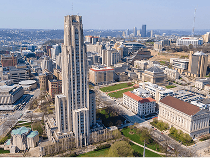

Headquarters
Pittsburgh, USA
Founded
2023
Instruments
Yokogawa CQ1 spinning-disk confocal with Hamamatsu ORCA-Flash; ultra-widefield microscope with Hamamatsu ORCA-Fusion
Imaging technique
Live fluorescence imaging, early embryogenesis, quantitative morphogenesis
Partner

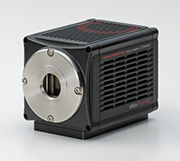
Powering Yokogawa CQ1 spinning-disk confocal
2048 x 2048 pixels (4.2MP)
100 fps full-frame readout for capturing fast dynamics
6.5 µm pixels optimized for detailed imaging across the field of view
Wide dynamic range and excellent balance of sensitivity, speed, and field of view
Learn more
Book a 30-minute discovery session. We'll walk you through how Jetraw fits into your imaging workflow.
Book a demo
We use cookies to enhance your browsing experience and analyse site traffic. By clicking "Accept all" you consent to our use of cookies. Manage preferences